
The Future of Specialized IT Work: Trends Shaping 2025 and Beyond on UpRize
- Home
- /
- The Future of Specialized IT Work: Trends Shaping 2025 and Beyond on UpRize
Publish Date:
May 14, 2025
In 2025, the landscape of specialized IT work is evolving faster than ever. With digital transformation becoming the norm, companies are shifting from traditional hiring models to dynamic, project-based structures.
According to a Statista report, the global freelance tech workforce is projected to reach 540 million by 2027, with the U.S. contributing a significant share.
Platforms like Uprize, a niche online IT human cloud marketplace, are at the heart of this change.
By connecting verified tech talent with project-ready businesses, Uprize is shaping the new normal for how IT work gets done.
In this article, we’ll explore major trends influencing the specialized IT workforce and how platforms like Uprize are solving the toughest challenges in hiring, collaboration, and project execution.
The Rise of Hybrid Talent Marketplaces in Specialized IT
How Uprize Pioneered the Verified Talent Marketplace Model
Unlike generic gig platforms, UpRize is built for the U.S. specialized IT sector, where verification, compliance, and skill precision are non-negotiable. Every profile undergoes background checks, SSN document verification, and tax form integration (W9).
Key tools that enable specialized matchmaking:
- “Find Project” for candidates and “Looking for Experts” for clients
- Filterable skills, availability, and verified rates
- In-app NDA signing, agreement review, and real-time notifications
This structure allows UpRize to build trust-first connections, ensuring only verified candidates interact with vetted clients.
Beyond Traditional Freelancing: The Hybrid Work Ecosystem
The gig economy isn’t just for creatives anymore. IT professionals are blending freelance, contract, and remote work into hybrid models.
UpRize supports this shift by:
- Allowing clients to choose visibility: public or invite-only job listings
- Supporting flat-rate and hourly projects
- Using milestone-based approvals and timesheets to handle diverse project flows
Data-Driven Matching for Specialized IT Skills
UpRize uses resume parsing + manual skill input, and matches candidates with projects using:
- Skill relevance and experience level
- AI-based proximity and availability detection
- Verified rate transparency
This ensures clients don’t just find available talent they find the right talent.
Premium Rates for Specialized IT Skills: Market Analysis
High-Value IT Specializations Commanding Top Rates in 2025
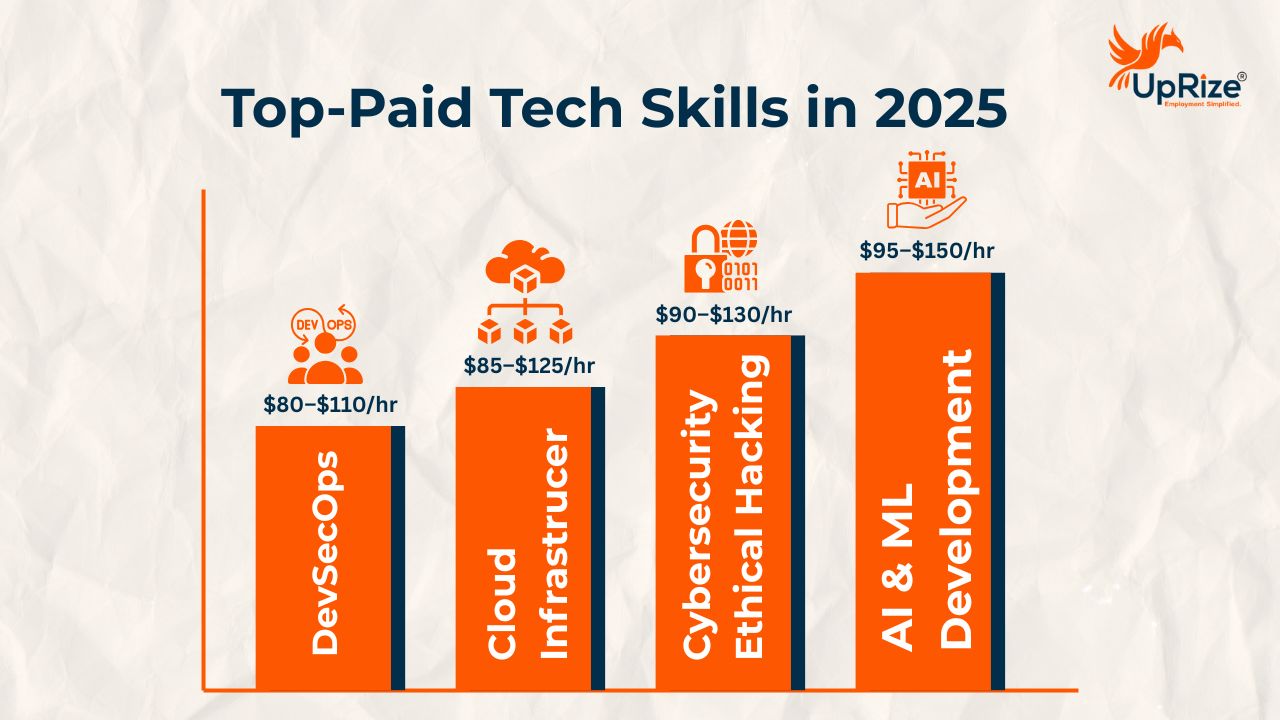
In 2025, the most sought-after IT skills include:
- AI & ML Development: $95-$150/hr
- Cybersecurity & Ethical Hacking: $90-$130/hr
- Cloud Infrastructure (AWS, Azure, GCP): $85-$125/hr
- DevSecOps and Compliance Experts: $80-$110/hr
UpRize lets professionals set custom rates, visible during project bidding. Its “Availability & Rates” section enables freelancers to quote with clarity.
The ROI of Specialized IT Talent for Businesses
Hiring full-time for niche skills can burn budget. With UpRize, clients can:
- Hire for short-term, high-impact milestones
- Reduce HR overhead and compliance bottlenecks
- Save on average 30-40% in operational costs per project
Strategic Rate Setting for IT Specialists on Uprize
UpRize enables smart earning through:
- Transparent rate comparison among verified profiles
- “Verified Badge” boosting trust and demand
- Review systems influencing rate benchmarks
Tip: Verified users with strong feedback and NDA-ready profiles consistently earn 20–30% more than unverified users.
Security Considerations Transforming IT Hiring Practices
The Critical Role of Background Verification in IT Talent Selection
With increasing cyber risk, companies demand verified collaborators. UpRize ensures:
- SSN + W9 verification for U.S.-based talent
- Documented NDA/Agreement signing
- Background check status visible in profiles
These steps prevent compliance issues in sensitive projects, especially in healthcare and finance.
Data Protection Protocols in Remote IT Collaboration
UpRize supports secure collaboration with:
- Document sharing with encryption
- NDA signing within the app
- Role-based access for shared files
These safeguards help clients meet HIPAA, PCI-DSS, and GDPR regulations.
Building Trust Through Verified Expertise and References
UpRize allows clients to rate past work, which contributes to:
- Skill verification through project history
- Building a review-based trust ecosystem
- Detecting and flagging underperforming users
The Evolution of Project-Based Work in the IT Sector
From Fixed Employment to Dynamic Project Teams
Modern IT departments now assemble fluid project teams for:
- Product sprints
- Compliance upgrades
- DevOps integrations
UpRize’s model encourages team formation based on skill needs, availability, and project timelines.
Managing Complex IT Projects Through Milestone-Based Collaboration
The milestone feature on UpRize:
- Breaks down projects into trackable goals
- Allows payment on approval, building trust
- Creates a framework for accountability
Clients can track real-time progress and approve or reject work directly from the app.
Building Long-Term Relationships Through Short-Term Projects
High-performing freelancers often get rehired. UpRize makes this easier through:
- Favorite candidate lists
- Messaging and video chat
- Visibility into past collaborations and reviews
This turns every short-term success into long-term partnerships.
Conclusion
The IT job market is evolving rapidly, and specialized project-based work is taking center stage in 2025.
This article explores key trends reshaping the future of specialized IT work in the USA, including the rise of hybrid talent marketplaces, premium rates for niche skills, the impact of data-driven matching, and security-driven hiring practices.
With platforms like UpRize leading the way, both businesses and IT professionals benefit from verified profiles, milestone-based collaboration, secure documentation, and flexible work models.
The piece highlights how companies are leveraging UpRize to build agile tech teams across industries like healthcare, fintech, and e-commerce saving costs while accessing high-value talent.
For IT professionals, the article offers actionable insights on how to set competitive rates, get verified, and thrive in the new freelance economy. Whether you’re hiring or seeking specialized IT roles, this comprehensive guide helps you navigate the future of work confidently.
FAQs – People Also Ask
How can IT professionals best position themselves for specialized project opportunities?
- Keep your Uprize profile updated
- Ensure background verification and NDA-ready status
- Regularly update availability and rates
- Highlight niche skills and past reviews
What security protocols should companies implement when working with remote IT specialists?
- Use NDA and Agreement workflows on UpRize
- Share documents only via the encrypted app
- Hire only verified profiles with background checks
How are compensation models evolving for specialized IT work?
- Shift from hourly to milestone or value-based pricing
- Clients prefer fixed scope, time-boxed execution
- UpRize supports both hourly and flat rate contracts with real-time approvals
What technologies are most impacting the specialized IT talent marketplace?
- AI & Machine Learning for resume parsing and matching
- Encrypted chat, video, and file sharing for remote work
- Blockchain for future contract and milestone verification
How can companies effectively manage and measure performance in project-based IT work?
- Use UpRize’s milestone and timesheet approval system
- Set KPI-linked deliverables
- Leverage client-candidate reviews and feedback loop